

All Climate change articles – Page 19
-
Thought leadership
TCFD Recommendations: Country reviews – France
The French strategy has been to take small steps to give enough time to all actors to implement climate disclosure.
-
 Engagement guide
An investor's guide to methane: Engaging with oil and gas companies to manage a rising risk
Methane, the primary component of natural gas, is a climate pollutant 84 times more powerful than carbon dioxide (CO2) over a 20-year period, and it is responsible for 25% of the global warming we are experiencing today.
-

-
 Case study
Case study: Fracking practices at oil and gas companies
As part of the PRI Fracking Engagement, a group of PRI investor signatories – led by Martin Currie, a UK-based investment manager – engaged with an Asian oil and gas company.
-
 Engagement guide
Engaging with oil and gas companies on fracking: an investor guide
The production of oil and gas via hydraulic fracturing (fracking) remains important and yet can be viewed as a contentious method in some regions, with community controversies, bans and moratoria in different areas.
-
 Discussion paper
Greening institutional investment
This paper takes stock of institutional investor experience with mobilising green capital for green investment and mainstreaming green factors across asset classes.
-
 Case study
Valuing the impact of increasingly stringent environmental regulation
Case study by Standard Life Investments
-

-
 Technical guide
A guide on climate change for private equity investors
Questions that LPs can ask their GPs, and that GPs can ask current or potential portfolio companies, to assess climate change impacts on private equity investments.
-
 Technical guide
Sustainable real estate investment: Implementing the Paris climate agreement
Identify key drivers and overcome the most common barriers to action for integrating ESG and climate change risks into real estate investments.
-
 Academic research
RI Quarterly vol. 9: Investing in a low-carbon world
To understand an issue as complex and important as redirecting the global economy to avoid dangerous climate change, the numbers matter.
-
Technical guide
Developing a climate change strategy step three: review
Asset owners can put processes in place to assess how effective they are in implementing their chosen strategies.
-
Technical guide
Portfolio climate change strategy three: avoid
Where an asset owner is exposed to companies dependent on fossil fuel reserves (conventional and unconventional oil, gas and coal), reallocation is a way to reduce this exposure, bearing in mind that fossil fuels are a key component of the world economy and that sectors such as electric utilities may ...
-
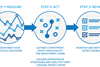 Technical guide
Developing an asset owner climate change strategy
There is a growing imperative for asset owners to align their investment portfolios with a low-carbon economy.
-
 Technical guide
Portfolio climate change strategy two: invest
Asset owners can consider investing with cilmate change integrated into decision making.
-
Technical guide
Portfolio climate change strategy one: engage
Engagement could be effective in various ways.
-
 Technical guide
Developing a climate change strategy step two: act
The following groups need to be engaged to decide on appropriate strategies: senior decision makers, beneficiaries and stakeholders, and portfolio managers.
-
 Technical guide
Developing a climate change strategy step one: measure
Evaluating portfolio exposure to climate change risk and opportunity, and reviewing portfolio emissions, are practical starting points for addressing climate change.
-
 Technical guide
Responsible investment in farmland
Farmland offers a stable long-term investment with the benefits of diversification, inflation protection and potential for attractive returns, but there are significant challenges, including water, soil health, biodiversity, toxics and land rights.
-
 Discussion paper
Reducing emissions across the portfolio
A growing number of asset owners want to know how their assets are exposed to climate change related risks, and the role that they can play in an orderly transition to a lower carbon economy.