


All Decent work articles – Page 2
-
 Academic research
Why and how investors can respond to income inequality
The gap in income and wealth between the very affluent and the rest of society has become one of the most noteworthy socio-economic issues of our time.
-
Engagement guide
How did companies in the human rights and extractives engagement assess human rights risk?
High-level trends Human rights risk assessment - identifying In 2015, two companies reported on human rights risk identification; this increased to 25 in 2017, making it one of the most improved areas. Almost all target companies have incorporated human rights considerations into their risk management processes and evaluated their ...
-
Engagement guide
How did companies in the human rights and extractives engagement monitor business relationships?
High-level trends Business relationships - selection Over half of the companies now report on the criteria used to select business relationships e.g. suppliers and security providers. While all categories have made progress on this indicator, companies in emerging markets have shown most improvement with almost half of them now ...
-
Engagement guide
How did companies in the human rights and extractives engagement show a commitment to human rights?
High-level trends All 32 companies publicly commit to respecting human rights. However, the level of commitment varies: a third has reached a very sophisticated level of commitment (standalone human rights policy/active participation in multi-stakeholder initiatives, etc.); a third has a clear and well-defined commitment but may not be as ...
-
 Engagement guide
Engaging with extractives companies: five key insights
Moving the laggards, the middle and the leaders Rooted in a risk-based approach, investors tend to focus on portfolio companies that have a poor human rights approach and performance. However, it was highlighted in engagement dialogues that investors should consult not only with laggards but also the ...
-
Engagement guide
How did companies in the human rights and extractives engagement respond to human rights incidents?
High-level trends Half of the companies evaluated now report on the way they respond to human rights allegations. While companies from developed markets have slightly progressed, companies from emerging countries have stalled – with the same 14% disclosing on this area as in 2015. What ...
-
Engagement guide
How did companies in the human rights and extractives engagement embed human rights into corporate practice?
High-level trends Governance and oversight Companies have made continuous progress in terms of governance and oversight – in particular there are now twice the number of companies from emerging markets and smaller sized companies that disclose how their board and senior management oversees the human rights policy and due ...
-
 Engagement guide
How did companies in the human rights and extractives engagement engage stakeholders and tackle grievance mechanisms?
High-level trends Stakeholder engagement Just over half the companies reported on stakeholder engagement in 2015, while as of 2017 almost all of them do. Companies that already reported on this indicator have strengthened their level of disclosure and the overall quality of stakeholder engagement. Companies participating in multi-stakeholder ...
-
Engagement guide
Summary of PRI-coordinated engagement on human rights in the extractives sector
From 2015 – 2017, 51 PRI signatories representing USD $7.3 trillion in assets engaged with 32 companies in the extractives sector.
-
 Engagement guide
Human rights and the extractives industry
Companies operating in the extractives sector face a multitude of complex human rights issues.
-
Engagement guide
Human rights and the extractives sector
There are different impacts on human rights along different phases of the value chain – exploration, operation and production – which are important to take into consideration when engaging.
-
 Engagement guide
How do companies address human rights risk in the cobalt supply chain?
Consumer electronics Apple has mapped its supply chain down to the mines and formed a coalition of industry players that led to the creation of a risk readiness assessment tool. One hundred percent of smelters in the chain receive third-party audits and Apple works ...
-
Engagement guide
Human rights risk assessment and due diligence in the cobalt supply chain
The OECD Guidance for Multinational Companies sets out different due diligence requirements that stem from the different responsibilities companies have according to their location in the supply chain.
-
 Engagement guide
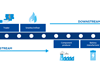
Risks in the upstream cobalt supply chain
ASM: Carried out informally by individuals or communities using manual labour and hand tools. 20% of the cobalt sourced from the DRC is mined this way. Large-scale mining (LSM): Industrial mining that represents 80% of the cobalt sourced from the DRC. LSM and ASM supplies ...
-
Engagement guide
How to respond to and remedy human rights violations in the cobalt supply chain
Under relevant international standards (e.g. UN Guiding Principles on Human Rights), companies have the responsibility to mitigate or remediate any negative impact caused – directly or indirectly by their activities. Ceasing relationships with problematic suppliers or ceasing to source from the DRC or from ASM does not constitute a ...
-
Engagement guide
Tackling human rights risk in the cobalt supply chain through industry initiatives
Joining and actively participating in industry initiatives allows companies to have a dialogue with peers, benefit from knowledge sharing platforms and combine efforts to tackle common challenges.
-
 Engagement guide
How investors can promote responsible cobalt sourcing practices
Lithium-ion batteries power products at the cutting edge of technology, from smartphones to laptops and electric cars.
-
 Webinar
Planting the seeds of change: managing social issues in land investing
The PRI’s webinar Planting the seeds of change: managing social issues in land investing explores why investors should consider land issues and learn about the Reference Guide for Risk Assessment in relation to land.
-
 Webinar
Managing ESG risks in the supply chains of private companies and assets
This webinar provides an overview of PRI’s guidance on Managing ESG risk in the supply chains of private companies and assets; as well as a discussion on engaging with portfolio companies to understand and mitigate ESG risks in the supply chain.
-
 Engagement guide
Moving the needle on responsible labour practices in the apparel industry
The starting point for respecting human and labour rights is to understand the impact of a company’s activities on people.
- Previous Page
- Page1
- Page2
- Page3
- Next Page