

All Environmental issues articles – Page 11
-
Engagement guide
Influence governance of water in the supply chain
Influencing the governance of water (i.e. the rules and institutions, both formal and informal, which determine how water is managed) is essential in addressing water risks.
-
Engagement guide
Encourage collective action to engage on supply chain water risks
To a large degree, water risk derives from the collective use of water by all stakeholders that share a common source.
-
Engagement guide
Promoting internal and supply chain action to mitigate water risks
Once a company’s water impacts and risks are understood, a response and risk mitigation strategy should be developed and implemented.
-
Engagement guide
Foster water awareness - developing knowledge of impacts and water risks
As with each element in the framework, developing an awareness of water issues and, over time, an in-depth understanding of the complex and unique nature of water issues facing the company is an ongoing and iterative process.
-
 Engagement guide
An engagement framework for water risks in agricultural supply chains
In partnership with WWF, the PRI developed an engagement framework to facilitate investor dialogue with companies on managing their agricultural supply chain water risk.
-
 Engagement guide
What is agricultural supply chain water risk?
While it is widely recognised that agriculture is the largest global user of water, supply of and demand for water by basin and crop vary considerably.
-
 Engagement guide
Growing water risk resilience: an investor guide on agricultural supply chains
Companies with direct operations and supply chains that are dependent on agriculture, the world’s largest user of water, are exposed to water risks. Those companies that appropriately mitigate these risks and demonstrate good water stewardship characteristics will create value for their shareholders.
-
 Engagement guide
Introduction: Investor guide on water risks in agricultural supply chains
The World Economic Forum highlights water as a top global risk with associated climate, weather, economic, social, competition and infrastructure impacts.
-
 Thought leadership
Responding to megatrends: Investment institutions trend index 2017
What is a megatrend? Most institutions share a common belief that megatrend dynamics will result in multidimensional transformations across society, technology, economics, environment and politics (STEEP). We would also strongly encourage this thinking about megatrends to be framed within the context of an integrated system of real-world powerful forces altering ...
-
 Webinar
PRI in Person 2017 - Latest insights from RI research
Prize winning research will be presented from the PRI Awards and the FIR-PRI Finance and Sustainability Awards.
-
 PRI Web Page
Investor action on climate change: A PRI-Novethic assessment of global investor practices
For long-term investors, safeguarding investments requires mitigation of climate change.
-
 Engagement guide
2 degrees of separation: Transition risk for oil and gas in a low carbon world
Are the oil majors aligned with a 2°C target? This new analysis provides a way of understanding whether the supply options of the largest publicly traded oil and gas producers are aligned with demand levels consistent with the agreed target for maximum global warming.
-
 Engagement guide
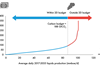
Calculating carbon supply cost curves in a 2°C scenario
In order to try and allocate the carbon budget at a company level, Carbon Tracker developed the carbon supply cost curve approach.
-
 Engagement guide
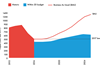
Calculating a 2°C capex pathway for oil and gas companies
Having calculated the oil and gas production associated with a 2D scenario, we can then identify the level of capital expenditure required, and the delta to business-as-usual, (BAU).
-
Engagement guide
Oil and gas company/project exposure to a 2°C scenario
Companies that have a lower percentage of unneeded capex can be seen as more aligned with a 2D budget; companies with a greater percentage of unneeded capex warrant further attention from investors.
-
 Engagement guide
NPV sensitivity of oil and gas companies to a 2°C scenario
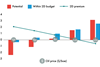
The NPVs of a company’s 2D-compliant portfolio and its BAU portfolio can be compared to give an insight into the cost structures of the two and their relative values.
-
 Engagement guide
Scenario analysis – degrees of warming
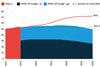
Scenarios are often misrepresented. Ultimately they are one version of the future, not a prediction or forecast.
-
Engagement guide
Introduction to transition risk for oil and gas companies
The speed and scale of the energy transition is becoming more obvious every day, causing more investors to accept the need to improve their strategies to be well positioned as structural changes in the energy and related sectors occur.
-
Thought leadership
TCFD Recommendations: Country reviews – Brazil
This review concludes that there is scope for Brazil to work towards a stronger disclosure regime, such as that identified by the TCFD under its recommendations.
-
Thought leadership
TCFD Recommendations: Country reviews – Canada
This review concludes that a strong disclosure regime such as that identified by the TCFD under its recommendations would assist materially in ensuring climate risk mitigation in Canada.