


All Listed equity articles
-
 Workshop summary
Net zero in practice: Insights from equity investors (part 2)
Key points from a series of five workshops where investment managers discussed how to decarbonise their listed equity portfolios.
-
 Case study
Varma: How we calculate our financed emissions
Calculating and measuring financed emissions in multiple asset classes simultaneously is not straightforward.
-
 Case study
Neuberger Berman: How to identify companies that are making progress to net zero
Many investors have made net-zero commitments. We believe metrics need to rapidly evolve in response.
-
 Case study
RCB GAM: Decoding weighted average carbon intensity
The following analysis aims to identify the drivers of changes in portfolio weighted average carbon intensity (WACI) over time.
-
 Case study
Savills Investment Management: embedding climate resilience
Adapting real assets to become climate resilient.
-
 Case study
Clear Skies Investment Management: using the SDGs to guide investment decisions
The Clear Skies Impact Radar is a proprietary tool to assess target company performance on the SDGs and identify weaknesses which could represent risks.
-
 Case study
Investi: Accelerating innovation in sustainable finance through collaboration
A collaboration between 12 major Quebec financial institutions led by Innocap.
-
 PRI Web Page
PRI asset class and asset owner guidance advisory committees: call for new members
The PRI is looking for signatories to join its asset class and asset owner guidance advisory committees.
-
 Case study
Net zero in practice: Insights from equity investors
This report shares insights from the first comprehensive set of case studies around how to implement net-zero commitments in listed equity portfolios.
-
 Webinar
Proxy Season 2023: key takeaways and looking ahead
Are the tides changing? This session focuses on the key takeaways from the 2023 proxy season and what this could mean for 2024. Participants are equipped with the tools and guidance PRI offers to support investors throughout the proxy cycle.
-
 Case study
Mirova: Using the SDGs to accelerate sustainable economic transformation
SDG outcomes case study
-
 Case study
VFMC: Portfolio alignment with net zero
Zeroing in on Scope 3 emissions to advance net-zero ambition
-
 Case study
Robeco: Re-baselining for a net-zero commitment
Striving to accurately track progress by controlling for changes in financial metrics.
-
 Webinar
Climate commitments made, what next for public and private equity?
The session will explore the next, post-target setting stage of net zero investing.
-
-
 Technical guide
ESG integration in listed equity: A technical guide
This guide aims to support listed equity investors in integrating environmental, social and governance (ESG) considerations into their strategies. It is intended as a resource for those looking to review or update ESG policies and practices over time, but will also cater to those developing a responsible investment approach for ...
-
 Podcast
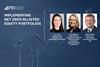
Implementing net zero in listed equity portfolios
In this episode of the PRI podcast, we discuss implementing net zero commitments in listed equity portfolios. Joined by Anna Cala, Assistant Vice President, ESG, ClearBridge Investments, and Maia Becker, Senior Director, RBC Global Asset Management
-
 Case study
Invesco: A systematic approach to a net-zero portfolio
A two-step process to delivering on climate and financial targets.
-
 Case study
La Française Asset Management: Measuring temperature alignment
Aggregating holdings into a portfolio-level temperature rating
-
 Webinar
Proxy Season 2023: tools and resources from the PRI on voting and collaboration
This webinar will explore the tools and resources that PRI offers to support investors through the busy proxy season, including through the PRI Resolution Database.