


All Stewardship articles – Page 10
-
Engagement guide
How did companies in the human rights and extractives engagement show a commitment to human rights?
High-level trends All 32 companies publicly commit to respecting human rights. However, the level of commitment varies: a third has reached a very sophisticated level of commitment (standalone human rights policy/active participation in multi-stakeholder initiatives, etc.); a third has a clear and well-defined commitment but may not be as ...
-
 Engagement guide
Engaging with extractives companies: five key insights
Moving the laggards, the middle and the leaders Rooted in a risk-based approach, investors tend to focus on portfolio companies that have a poor human rights approach and performance. However, it was highlighted in engagement dialogues that investors should consult not only with laggards but also the ...
-
Engagement guide
How did companies in the human rights and extractives engagement respond to human rights incidents?
High-level trends Half of the companies evaluated now report on the way they respond to human rights allegations. While companies from developed markets have slightly progressed, companies from emerging countries have stalled – with the same 14% disclosing on this area as in 2015. What ...
-
Engagement guide
How did companies in the human rights and extractives engagement embed human rights into corporate practice?
High-level trends Governance and oversight Companies have made continuous progress in terms of governance and oversight – in particular there are now twice the number of companies from emerging markets and smaller sized companies that disclose how their board and senior management oversees the human rights policy and due ...
-
 Engagement guide
How did companies in the human rights and extractives engagement engage stakeholders and tackle grievance mechanisms?
High-level trends Stakeholder engagement Just over half the companies reported on stakeholder engagement in 2015, while as of 2017 almost all of them do. Companies that already reported on this indicator have strengthened their level of disclosure and the overall quality of stakeholder engagement. Companies participating in multi-stakeholder ...
-
Engagement guide
Summary of PRI-coordinated engagement on human rights in the extractives sector
From 2015 – 2017, 51 PRI signatories representing USD $7.3 trillion in assets engaged with 32 companies in the extractives sector.
-
Engagement guide
Human rights and the extractives sector
There are different impacts on human rights along different phases of the value chain – exploration, operation and production – which are important to take into consideration when engaging.
-
 Engagement guide
Results of the PRI collaborative engagement on water risks
Below is a summary of the results of the PRI-coordinated engagement on water risks in agricultural supply chains.
-
 Case study
Case study: Rio Tinto shareholder resolution 2018 - LGIM's perspective
Case study by Legal & General Investment Management
-

-

-
 Case study
Case study: understanding lobbying practices as part of carbon risk management
Case study by GES International
-

-
 Case study
Case study: Are the world's largest banks stepping up to the risks and opportunities of climate change?
Case study by Boston Common Asset Management
-
 Case study
Climate lobbying case study: ExxonMobil - perspective from Walden Asset Management
Case study by Walden Asset Management
-
 Engagement guide
The PRI-coordinated collaborative engagement on climate lobbying
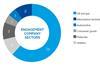
Launched in 2015, 35 investors with AUM of US$2 trillion joined the PRI’s collaborative engagement on corporate climate lobbying practices, targeting 21 companies across the following sectors.
-
 Engagement guide
Recommendations for future climate lobbying engagement
The following recommendations highlight key areas for driving climate lobbying practice performance further.
-
Engagement guide
Examples of policy engagement governance and climate lobbying
A range of good and poor practice identified by InfluenceMap across sectors for policy engagement governance and climate lobbying positions are provided below.
-
Engagement guide
How to engage with companies on climate lobbying
Stage 1: Identifying potential red flags Before engaging with a company on its climate lobbying practices, several signs will help indicate the likelihood of direct or indirect obstructive climate lobbying practices: no transparency or a negative public stance on climate science; no reporting on money spent on national or ...