


All Active Ownership 2.0 articles – Page 9
-
Technical guide
Introduction to active ownership in listed equity
Active ownership is one of the fastest-growing responsible investment strategies in listed equity globally.
-
 Technical guide
A practical guide to active ownership in listed equity
This report outlines concrete steps to make active ownership an effective tool to support long-term value creation in listed equity investing.
-
 Webinar
Managing ESG risks in the supply chains of private companies and assets
This webinar provides an overview of PRI’s guidance on Managing ESG risk in the supply chains of private companies and assets; as well as a discussion on engaging with portfolio companies to understand and mitigate ESG risks in the supply chain.
-
 Engagement guide
Moving the needle on responsible labour practices in the apparel industry
The starting point for respecting human and labour rights is to understand the impact of a company’s activities on people.
-
Engagement guide
The apparel industry in the spotlight
The apparel industry is a complex sector. Valued at US$3 trillion, the global market accounts for 2% of the world’s GDP.
-
Engagement guide
Eight recommendations for investors engaging with apparel companies
To encourage apparel companies to improve labour practices in the apparel industry, investors can do a number of things.
-
Engagement guide
Eleven alerts for investors when engaging with clothing companies
We interviewed a number of investors who have engaged companies on human rights issues.
-
 Engagement guide
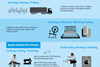
The potential human rights issue companies face when making a t-shirt
Adverse human rights issues and impacts are found throughout the supply chain.
-
 PRI Web Page
Investor action on climate change: A PRI-Novethic assessment of global investor practices
For long-term investors, safeguarding investments requires mitigation of climate change.
-
 Engagement guide
2 degrees of separation: Transition risk for oil and gas in a low carbon world
Are the oil majors aligned with a 2°C target? This new analysis provides a way of understanding whether the supply options of the largest publicly traded oil and gas producers are aligned with demand levels consistent with the agreed target for maximum global warming.
-
 Engagement guide
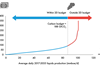
Calculating carbon supply cost curves in a 2°C scenario
In order to try and allocate the carbon budget at a company level, Carbon Tracker developed the carbon supply cost curve approach.
-
 Engagement guide
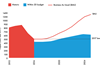
Calculating a 2°C capex pathway for oil and gas companies
Having calculated the oil and gas production associated with a 2D scenario, we can then identify the level of capital expenditure required, and the delta to business-as-usual, (BAU).
-
Engagement guide
Oil and gas company/project exposure to a 2°C scenario
Companies that have a lower percentage of unneeded capex can be seen as more aligned with a 2D budget; companies with a greater percentage of unneeded capex warrant further attention from investors.
-
 Engagement guide
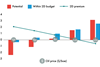
NPV sensitivity of oil and gas companies to a 2°C scenario
The NPVs of a company’s 2D-compliant portfolio and its BAU portfolio can be compared to give an insight into the cost structures of the two and their relative values.
-
 Engagement guide
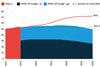
Scenario analysis – degrees of warming
Scenarios are often misrepresented. Ultimately they are one version of the future, not a prediction or forecast.
-
Engagement guide
Introduction to transition risk for oil and gas companies
The speed and scale of the energy transition is becoming more obvious every day, causing more investors to accept the need to improve their strategies to be well positioned as structural changes in the energy and related sectors occur.
-
Engagement guide
Recommendations for engagement on director nominations
As a result of the analysis presented in this report, investors are encouraged to continue discussions with their investee companies on director nominations.
-
 Engagement guide
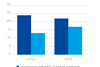
Results from French engagement on director nominations
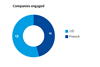
As with the US, investors chose to engage with 11 French companies ranked in the lower 50% of all CAC40 company performance based on their nominations process.
-
 Engagement guide
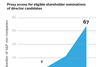
Results from US engagement on director nominations
The 13 US companies investors selected for engagement in 2014 ranked in the lower 50% of all S&P100 company performance on nominations processes when assessed against indicators included in the commissioned research.
-
 Engagement guide
Director nominations engagement background
After consulting with signatories and acknowledging the critical importance of the nominations process to longterm investor returns, the PRI coordinated a collaborative engagement on the issue.