


All Human rights articles – Page 6
-

-
 Webinar
Investing in human rights: a roadmap for investor action
This webinar will explore the responsibilities of institutional investors to respect human rights, and how this can be implemented in practice by exploring the recently launched Investor Toolkit prepared by the Investor Alliance on Human Rights.
-
 Webinar
PRI London Forum - Finance Against Modern Slavery and Human Trafficking
This video explores the implications for investors of a strengthened UK Modern Slavery Act, and discuss best practices for engaging with companies on this critical issue.
-
 Podcast
Human rights and renewable energy companies: what role can investors play?
In this episode of the PRI podcast, the PRI’s Nabylah Abo Dehman is joined by Steven Heim, Managing Director, Boston Common Asset Management, and Annie Signorelli, Project Manager for Renewable Energy and Human Rights at the Business and Human Rights Resource Centre.
-
 Webinar
Human rights due diligence and modern slavery: the case for investor action
This webinar will explore how investors can play a role in pushing for more and better human rights due diligence and will focus in particular on efforts to tackle modern slavery and human trafficking. Speakers from the UN Working Group on Business and Human Rights, the World Business Council for ...
-
 Article
A blueprint for mobilizing finance against slavery and trafficking
Finance Against Slavery and Trafficking’s Blueprint provides a collective action framework for the whole financial sector and professional service providers to accelerate action to end modern slavery and human trafficking.
-
 Webinar
PIP19 - Finance in human rights: What should investors do / be concerned about?
As the investment community increasingly recognises it has a role to play in ensuring that investee companies are addressing human rights issues, this session will: outline the relevance of human rights due diligence to investors; explore the avenues through which investors can facilitate real-world positive impact; discuss how investors can ...
-
 Case study
PRI Awards 2019 case study: Managing risk associated with modern slavery
Company: CDC Group HQ: UK Category: ESG Research Report of the Year (shortlisted)
-
 Case study
PRI Awards 2019 case study: Coller FAIRR Protein Producer Index
Company: FAIRR HQ: UK Category: ESG Research Report of the Year (shortlisted)
-
 Case study
PRI Awards 2019 case study: Kigali Bulk Water Supply Project
Company: Investec Asset Management HQ: South Africa Category: Real World Impact Initiative of the Year (shortlisted)
-
 Case study
PRI Awards 2019 case study: Platform Living Wage Financials
Company: MN (on behalf of the PLWF) HQ: Netherlands Category: Active Ownership Project of the Year (winner)
-
 Case study
PRI Awards 2019 case study: Cadmos Peace Investment Fund
Company: de Pury Pictet Turrettini (PPT) HQ: Switzerland Category: Active Ownership Project of the Year (shortlisted)
-
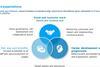 Webinar
Labour rights in infrastructure investing
In this webinar, the PRI, IFM Investors and the Committee on Workers’ Capital discussed key issues and different approaches to managing labour issues in infrastructure investing, and particularly sought to highlight how greater engagement between core stakeholders on these issues can be a critical success factor for different infrastructure projects.
-
 Webinar
Webinar: PRI and Investor Alliance: Labour rights in apparel supply chains – quo vadis
This webinar, hosted by the PRI and The Investor Alliance, discusses how investors can use two recent benchmarks published by The Corporate Human Rights Benchmark and KnowTheChain to assess companies in their portfolios. Adidas shares practical examples of how to ensure labour rights protection in challenging contexts and lower tiers ...
-
 Webinar
Webinar: how to prevent child exploitation online
The PRI hosted a webinar to explore the issue of child sexual exploitation online and how investors can engage with ICT companies on this issue. During the webinar speakers took the opportunity to discuss the issues related to the governance of ICT companies and their role in protecting users, of ...
-
Engagement guide
How did companies in the human rights and extractives engagement assess human rights risk?
High-level trends Human rights risk assessment - identifying In 2015, two companies reported on human rights risk identification; this increased to 25 in 2017, making it one of the most improved areas. Almost all target companies have incorporated human rights considerations into their risk management processes and evaluated their ...
-
Engagement guide
How did companies in the human rights and extractives engagement monitor business relationships?
High-level trends Business relationships - selection Over half of the companies now report on the criteria used to select business relationships e.g. suppliers and security providers. While all categories have made progress on this indicator, companies in emerging markets have shown most improvement with almost half of them now ...
-
Engagement guide
How did companies in the human rights and extractives engagement show a commitment to human rights?
High-level trends All 32 companies publicly commit to respecting human rights. However, the level of commitment varies: a third has reached a very sophisticated level of commitment (standalone human rights policy/active participation in multi-stakeholder initiatives, etc.); a third has a clear and well-defined commitment but may not be as ...
-
 Engagement guide
Engaging with extractives companies: five key insights
Moving the laggards, the middle and the leaders Rooted in a risk-based approach, investors tend to focus on portfolio companies that have a poor human rights approach and performance. However, it was highlighted in engagement dialogues that investors should consult not only with laggards but also the ...
-
Engagement guide
How did companies in the human rights and extractives engagement respond to human rights incidents?
High-level trends Half of the companies evaluated now report on the way they respond to human rights allegations. While companies from developed markets have slightly progressed, companies from emerging countries have stalled – with the same 14% disclosing on this area as in 2015. What ...