


All Human rights articles – Page 7
-
Engagement guide
How did companies in the human rights and extractives engagement embed human rights into corporate practice?
High-level trends Governance and oversight Companies have made continuous progress in terms of governance and oversight – in particular there are now twice the number of companies from emerging markets and smaller sized companies that disclose how their board and senior management oversees the human rights policy and due ...
-
 Engagement guide
How did companies in the human rights and extractives engagement engage stakeholders and tackle grievance mechanisms?
High-level trends Stakeholder engagement Just over half the companies reported on stakeholder engagement in 2015, while as of 2017 almost all of them do. Companies that already reported on this indicator have strengthened their level of disclosure and the overall quality of stakeholder engagement. Companies participating in multi-stakeholder ...
-
Engagement guide
Summary of PRI-coordinated engagement on human rights in the extractives sector
From 2015 – 2017, 51 PRI signatories representing USD $7.3 trillion in assets engaged with 32 companies in the extractives sector.
-
 Engagement guide
Human rights and the extractives industry
Companies operating in the extractives sector face a multitude of complex human rights issues.
-
Engagement guide
Human rights and the extractives sector
There are different impacts on human rights along different phases of the value chain – exploration, operation and production – which are important to take into consideration when engaging.
-
 Engagement guide
How do companies address human rights risk in the cobalt supply chain?
Consumer electronics Apple has mapped its supply chain down to the mines and formed a coalition of industry players that led to the creation of a risk readiness assessment tool. One hundred percent of smelters in the chain receive third-party audits and Apple works ...
-
Engagement guide
Human rights risk assessment and due diligence in the cobalt supply chain
The OECD Guidance for Multinational Companies sets out different due diligence requirements that stem from the different responsibilities companies have according to their location in the supply chain.
-
 Engagement guide
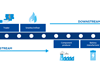
Risks in the upstream cobalt supply chain
ASM: Carried out informally by individuals or communities using manual labour and hand tools. 20% of the cobalt sourced from the DRC is mined this way. Large-scale mining (LSM): Industrial mining that represents 80% of the cobalt sourced from the DRC. LSM and ASM supplies ...
-
Engagement guide
How to respond to and remedy human rights violations in the cobalt supply chain
Under relevant international standards (e.g. UN Guiding Principles on Human Rights), companies have the responsibility to mitigate or remediate any negative impact caused – directly or indirectly by their activities. Ceasing relationships with problematic suppliers or ceasing to source from the DRC or from ASM does not constitute a ...
-
Engagement guide
Tackling human rights risk in the cobalt supply chain through industry initiatives
Joining and actively participating in industry initiatives allows companies to have a dialogue with peers, benefit from knowledge sharing platforms and combine efforts to tackle common challenges.
-
 Engagement guide
How investors can promote responsible cobalt sourcing practices
Lithium-ion batteries power products at the cutting edge of technology, from smartphones to laptops and electric cars.
-
 Webinar
Planting the seeds of change: managing social issues in land investing
The PRI’s webinar Planting the seeds of change: managing social issues in land investing explores why investors should consider land issues and learn about the Reference Guide for Risk Assessment in relation to land.
-
 Webinar
Managing ESG risks in the supply chains of private companies and assets
This webinar provides an overview of PRI’s guidance on Managing ESG risk in the supply chains of private companies and assets; as well as a discussion on engaging with portfolio companies to understand and mitigate ESG risks in the supply chain.
-
 Discussion paper
Human rights in private equity
It is increasingly expected that human rights due diligence (HRDD) is undertaken by businesses, as per the UN Guiding Principles on Business and Human Rights (UNGPs), OECD Guidelines for multinational enterprises, emerging laws such as the UK Modern Slavery Act and the French duty of vigilance law, and other proposed ...
-
Engagement guide
The apparel industry in the spotlight
The apparel industry is a complex sector. Valued at US$3 trillion, the global market accounts for 2% of the world’s GDP.
-

-
Engagement guide
Expectation 1 for food and beverage companies: supplier code of conduct
Companies should have a publicly available supplier code of conduct that reflects international standards such as the ILO core labour standards (covering child labour, forced labour, trade union rights and equal opportunities), covers health and safety and working conditions, and contains at least a longer term target for a living ...
-
Engagement guide
Expectation 2 for food and beverage companies: governance
Companies should ensure oversight at board level, and that board members are regularly trained. They should establish processes that enable them to identify and respond appropriately to legislation and ensure relevant departments (e.g. human resource and labour/ environmental compliance, senior management, procurement or sourcing, communications and/ or marketing, production) are ...
-
Engagement guide
Expectation 3 for food and beverage companies: traceability and risk assessment
Companies should map their supply chains, by geography and by product, and assess labourrelated risks in the supply chain, by geography and by product.
-
Engagement guide
Expectation 4 for food and beverage companies: sourcing and supplier relationships
Companies should evaluate suppliers for labour performance, including on minimum labour compliance criteria and on suppliers’ capacity to manage compliance of their own suppliers.